What Is a Pilonidal Sinus?
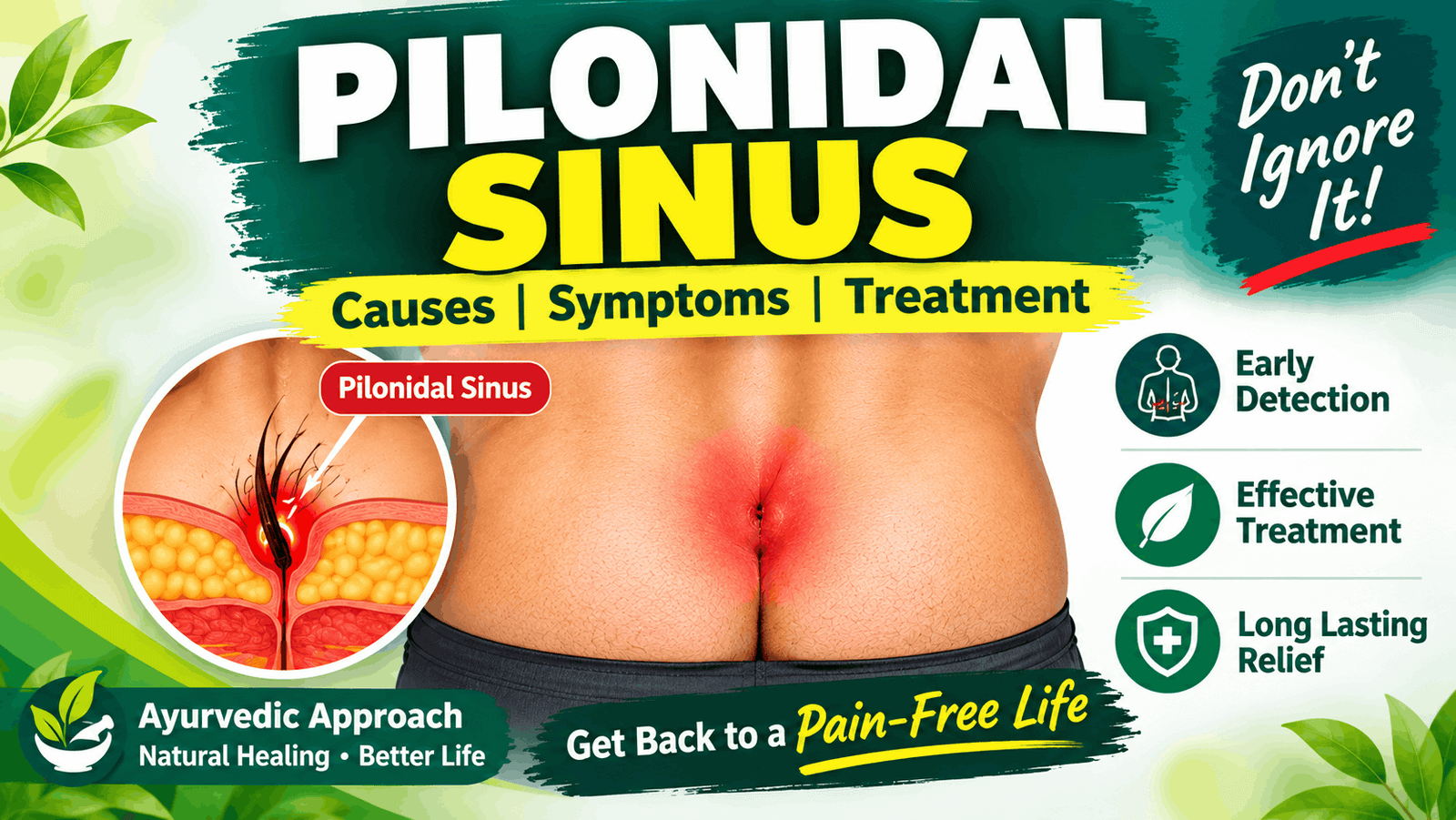
A pilonidal sinus is a small tunnel or tract in the skin. It usually forms at the top of the buttock cleft, near the tailbone, and may contain trapped hair, skin debris and inflammatory tissue. When it becomes infected, it can cause pain, swelling and an abscess.
It is most common in young adults. Early evaluation helps control symptoms and reduce the risk of repeated infection.
Common Symptoms
• Pain near the tailbone, often worse while sitting or moving
• Swelling, redness and tenderness
• Pus, blood or fluid draining from a small opening
• An unpleasant smell when an infected sinus drains
• Fever, if the infection becomes severe
Seek prompt medical attention if you have severe pain, rapidly increasing swelling or fever.
What Causes It?
A pilonidal sinus usually develops when loose hair becomes embedded in the skin and triggers inflammation. Risk increases with:
• Prolonged sitting or pressure on the tailbone area
• Friction and repeated skin irritation
• Excess body hair in the region
• A deep buttock cleft
• A previous pilonidal sinus or abscess
Good hygiene helps, but it cannot prevent every case.
How We Diagnose
Diagnosis is usually clinical. The doctor examines the sinus openings, any discharge, signs of infection and whether an abscess is present. In complex or recurrent cases, further investigations may be advised to rule out other conditions such as fistula-in-ano.
Treatment Options
Treatment depends on the severity of the sinus, whether it is infected, and whether it has occurred before.
1. Conservative care For selected cases without an active abscess, this includes keeping the area clean and dry, reducing friction, and managing hair in the region.
2. Abscess drainage A painful abscess may need prompt drainage. Antibiotics may help in some situations, but they do not replace drainage when it is needed.
3. Surgical treatment Persistent, extensive or recurrent sinuses may need a surgical procedure. The technique is chosen according to the size and complexity of the sinus.
4. Ksharasutra therapy Ksharasutra is an Ayurvedic para-surgical technique that uses a medicated thread to manage abnormal tracts. It may be considered in selected cases of pilonidal sinus, after individual assessment. It is not suitable for every patient. Any active abscess is usually drained first.
Why Early Evaluation Helps
• Confirms the diagnosis and rules out other conditions
• Detects infection or abscess early
• Guides the choice of the right treatment
• Relieves pain and discharge sooner
• Reduces the risk of complications
Outcomes vary between patients, and recurrence is possible with any treatment.
Why Choose Susrutha?
• 40 years dedicated exclusively to ano-rectal and related conditions
• More than 1 lakh patients treated
• Experience with recurrent and complex cases
• Individualized, evaluation-led treatment
• Led by Prof. Dr. B. SatyaNarayana, Retired Professor of Shalyatantra
Frequently Asked Questions
Can a pilonidal sinus heal on its own?
Symptoms may settle temporarily, but the sinus often persists or recurs. A medical evaluation is advised.
Is Ksharasutra suitable for pilonidal sinus?
It may be suitable in selected cases. That decision is made only after examination.
Can it come back after treatment?
Yes, recurrence is possible with any treatment. Hair management and reducing pressure on the area help lower the risk.
Who is most at risk?
Young adults, people who sit for long periods, and those with more body hair in the area.
Since 1986 | 1 Lakh+ Patients Treated | Specialized Ayurvedic Care