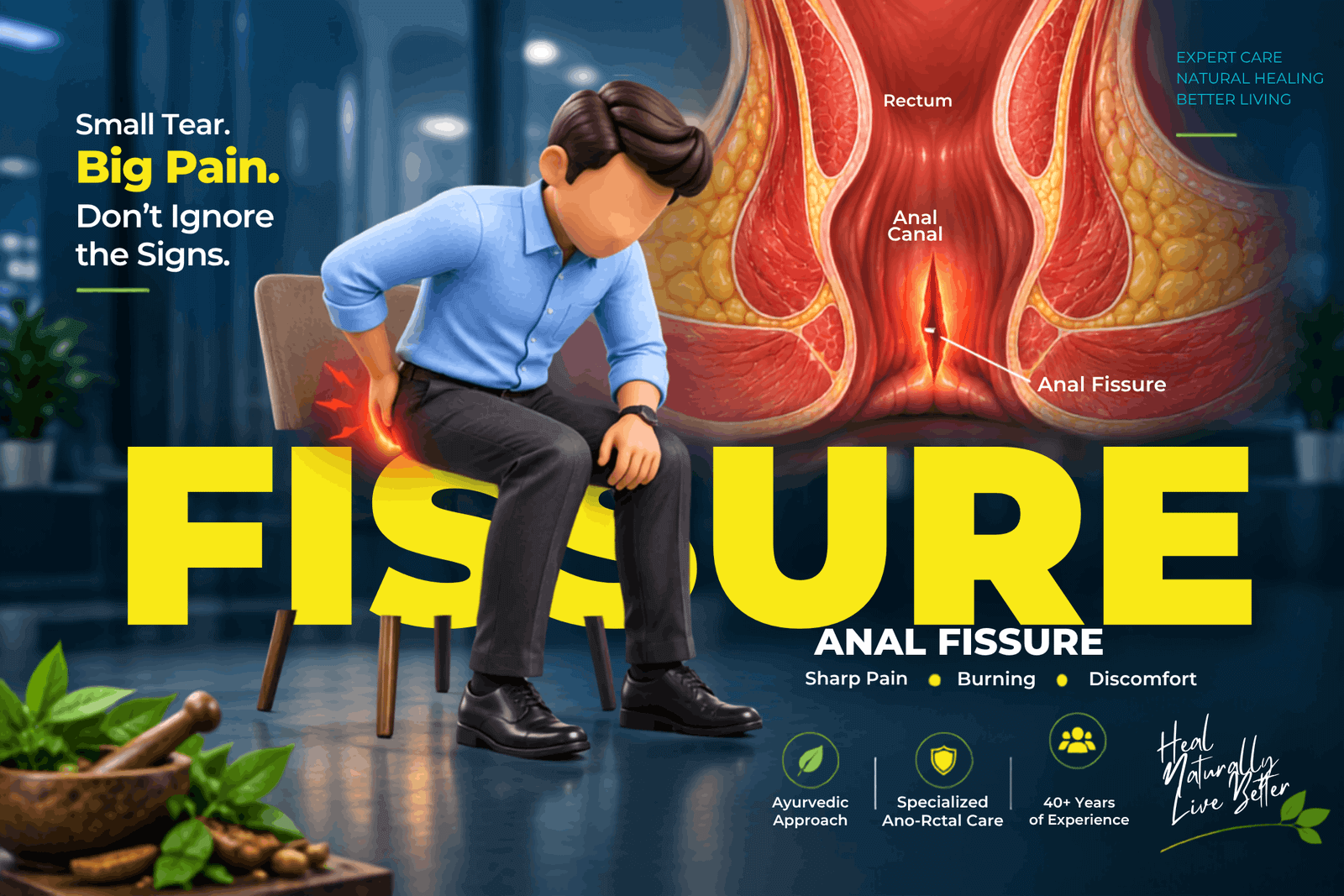
What Is an Anal Fissure?
An anal fissure is a small tear or crack in the lining of the anus. It typically causes sharp pain during or after passing stools, sometimes with a little bright red bleeding. It is a common condition and can affect people of any age.
In Ayurveda, it is described as Parikartika.
Common Symptoms
• Sharp or cutting pain while passing stools
• Burning pain that persists after motion
• Bright red blood on the stool or toilet paper
• Itching or irritation around the anus
• A visible crack near the anal opening
• A small skin tag, in chronic cases
Pain can make patients afraid to pass stools. That fear worsens constipation and delays healing.
What Causes It?
• Hard or dry stools
• Chronic constipation and straining
• Repeated diarrhoea
• Local trauma or irritation
• Certain inflammatory bowel conditions
If these factors continue, an acute fissure may become chronic.
Fistula, Piles or Fissure?
PIles: Swollen hemorrhoidal tissue. Main symptom: Bleeding, prolapse
Fissure: Tear in the anal lining Main symptom: Sharp pain during motion
Fistula: Abnormal tract to the skin Main symptom: Recurrent discharge or abscess
Treatment Options
Treatment depends on the cause, duration and severity of the fissure.
1. Diet and lifestyle Soft, regular motions are the foundation of healing. This means:
• More dietary fibre and adequate water
• Treating constipation
• Avoiding straining and prolonged sitting on the toilet
• Staying physically active
2. Medical management Medicines and local applications relieve pain, ease bowel movements and support healing. Avoid self-medication, especially if pain or bleeding persists.
3. Ayurvedic management Following the principles of Shalyatantra, treatment is chosen after clinical evaluation. It may include Ayurvedic medicines, local therapies and dietary guidance.
4. Para-surgical or surgical treatment Chronic or recurrent fissures that do not respond to conservative care may need a procedure. The approach depends on the individual patient and the characteristics of the fissure.
When to See a Specialist
• Persistent anal pain or pain during motion
• Recurrent bleeding
• Symptoms lasting several weeks
• Repeated episodes of fissure
• A lump or swelling near the anus
Rectal bleeding should always be evaluated, because it can have causes other than a fissure.
Why Choose Susrutha?
• 40 years dedicated exclusively to ano-rectal care
• More than 1 lakh patients treated
• Experience with chronic and recurrent fissures
• Ayurvedic principles combined with modern clinical evaluation
• Led by Prof. Dr. B. SatyaNarayana, Retired Professor of Shalyatantra
Frequently Asked Questions
Can a fissure heal without surgery?
Many acute fissures heal with diet, bowel regulation and conservative treatment. Some chronic fissures need a procedure.
Why does my fissure keep coming back?
Recurrence is common when constipation or straining continues. Correcting bowel habits is key to prevention.
Is the skin tag a pile?
Not necessarily. A skin tag at the fissure, called a sentinel tag, is a sign of chronic fissure, and only an examination can tell them apart.
Is bleeding from a fissure serious?
Fissure bleeding is usually slight. However, any rectal bleeding should be examined to rule out other causes.