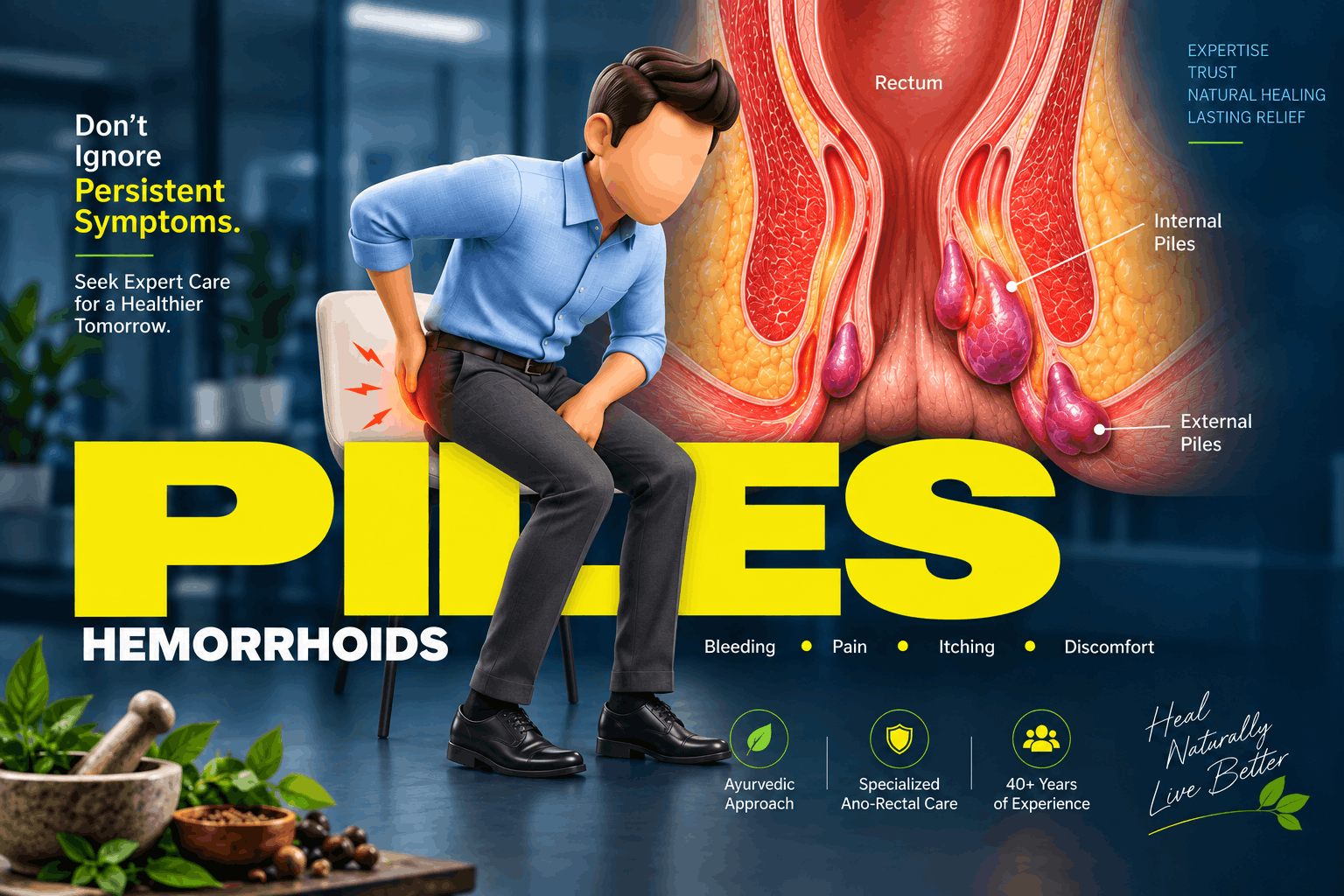
Swollen vascular cushions. Main symptom: Painless bleeding, prolapse
Tear in the anal lining. Main symptom: Sharp pain during motion
Abnormal tract to the skin. Main symptom: Recurrent discharge or abscess
Rectal bleeding can also arise from other conditions, some of them serious.
Every patient with bleeding should be examined by a doctor. Further evaluation, sometimes including colonoscopy,
is advised if bleeding comes with:
• A change in bowel habits
• Weight loss
• Anaemia
• Age above 40
• A family history of bowel disease
How We Diagnose
1. Clinical history
2. Inspection and digital rectal examination
3. Proctoscopy, to grade the piles
4. Further investigations, when clinically indicated
Our Treatment Approach
Acharya Sushruta described four lines of treatment for Arsha: Bheshaja (medicines),
Kshara (alkaline caustic application), Agni (thermal cautery) and Shastra (surgery).
The choice depends on the stage and nature of the piles.
At Susrutha, treatment is individualized and may include:
• Conservative care: Ayurvedic medicines, dietary correction and bowel regulation, mainly for early-stage piles
• Kshara Karma: application of a medicated alkaline preparation to selected internal piles
• Ksharasutra Ligation: ligation of the pile mass at its base with a medicated thread, in selected advanced cases
• Agnikarma: therapeutic heat application, in selected cases
• Surgical procedures based on Ayurvedic Shalyatantra, where required
Which procedure suits a patient is decided after examination and grading.
Prevention and Self-Care
• Eat a high-fibre diet with plenty of vegetables, fruits and whole grains
• Drink adequate water
• Avoid straining and prolonged sitting on the toilet
• Respond promptly to the urge to pass motion
• Stay physically active
Why Choose Susrutha?
• 40 years dedicated exclusively to ano-rectal care
• More than 1 lakh patients treated
• Experience across all grades of piles
• Classical Kshara and Ksharasutra techniques
• Led by Prof. Dr. B. SatyaNarayana, Retired Professor of Shalyatantra
When to See a Specialist
• Any bleeding during motion
• A lump that comes out during motion
• Persistent itching, discomfort or mucus discharge
• Sudden severe pain with a hard lump near the anus
Frequently Asked Questions
Can piles be treated without surgery?
Many early-stage piles respond to medicines, diet and bowel regulation. Advanced piles may need a para-surgical or surgical procedure.
Is bleeding always due to piles?
No. Rectal bleeding has several possible causes, so it should always be evaluated by a doctor.
Will piles come back after treatment?
Recurrence is possible with any treatment. Dietary and bowel-habit changes play an important role in prevention.
Are piles common during pregnancy?
Yes. Pregnancy increases pressure on the pelvic veins. Treatment during pregnancy is usually conservative and should be supervised by a doctor.